
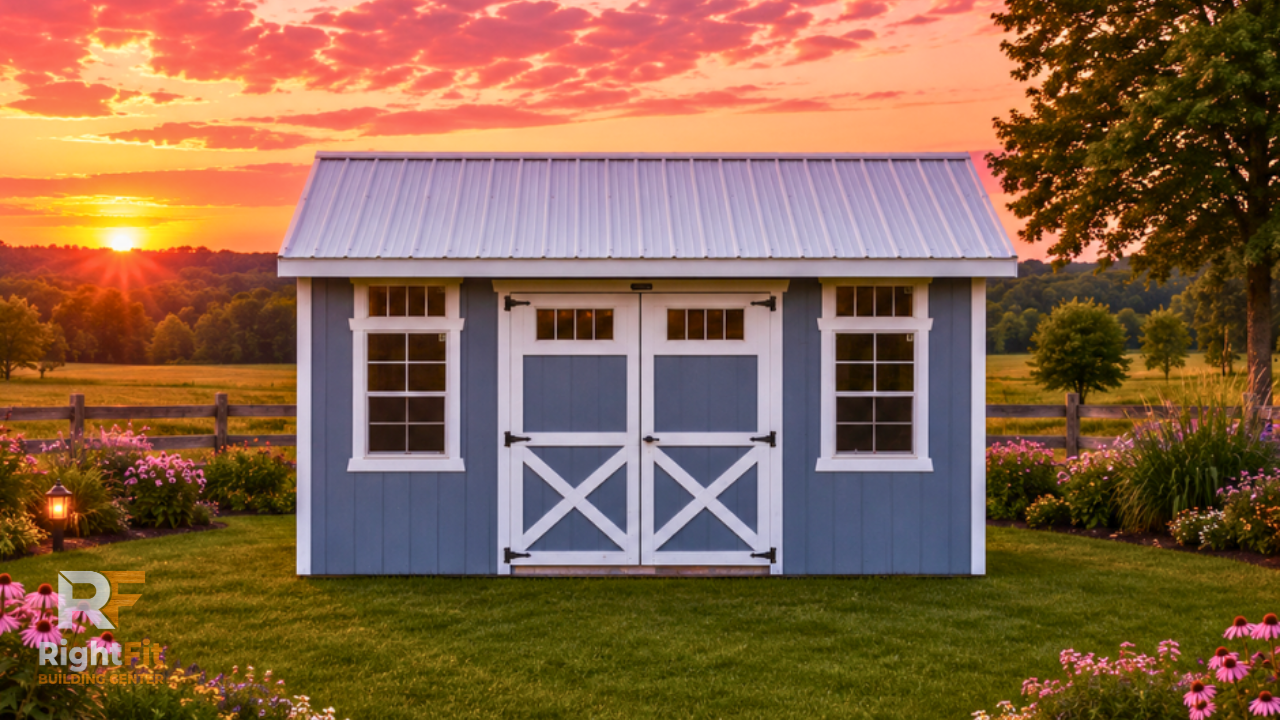
The Montana - A 10×16 Wood Shed with a 2’ overhang on the front.
Choosing the right storage shed size comes down to more than measuring your lawn equipment or counting the boxes in your garage. You also need to consider how you will access your belongings, whether you plan to buy larger equipment in the future, and how much room you want to leave for other activities.
At RightFit Building Center in Springfield, Ohio, we help customers find wood storage sheds that fit their property, storage needs, and budget. Three popular sizes are 10x12, 10x16, and 10x20. Each serves a different purpose, from clearing out a storage unit to creating a dedicated hobby space.
As a general rule, a 10x12 shed works well for basic storage or a lawn mower, a 10x16 provides more room for equipment and additional belongings, and a 10x20 offers space for multiple pieces of equipment or a dedicated hobby area. The best choice depends on what you need to store and how much room you need to move around inside.
How Much Space Do You Get With Each Shed Size?
All three shed sizes are 10 feet wide, but the additional length makes a noticeable difference in how you can use the building.
10x12 Storage Shed: Best for Basic Storage
A 10x12 shed provides 120 square feet of floor space. It is a practical option for homeowners who need to move belongings out of a storage unit or create dedicated space for lawn care equipment.
An average self-storage unit is often around 10x10, so a 10x12 shed can be an attractive alternative for someone who wants to keep their belongings on their own property. However, the usable storage arrangement will depend on the building's layout, door placement, and the size of the items being stored.
A 10x12 may be a good fit for:
Boxes, seasonal decorations, and household belongings
Push mowers, lawn tools, and gardening supplies
Bicycles and outdoor recreation equipment
A combination of smaller storage items
If you want to store a riding mower or zero-turn mower, measure the equipment before choosing this size. You will need room to bring it through the door and position it without blocking access to everything else.
A 10x12 is a good starting point for basic storage, but it can feel crowded quickly when larger equipment enters the picture.
10x16 Storage Shed: A Versatile Middle Ground
A 10x16 shed provides 160 square feet of floor space. That is 40 additional square feet compared with a 10x12, and those extra four feet of length can make a substantial difference in everyday use.
This is a common size for customers who need more than basic storage but do not necessarily need a large building.
A 10x16 works well for:
A zero-turn mower and additional lawn equipment
A riding mower, yard tools, and seasonal belongings
Motorcycles or ATVs alongside other stored items, depending on their dimensions
Household storage with enough room to organize belongings more effectively
The biggest advantage is flexibility. You can accommodate a larger piece of equipment while retaining some space for other items and access.
Think about how you will use the shed on a regular basis. If you need to park a zero-turn mower inside and retrieve tools or storage boxes throughout the year, having extra floor space can make the building much easier to use.
For many homeowners who are unsure whether a smaller shed will be enough, the 10x16 is worth considering.
10x20 Storage Shed: Best for Multiple Uses
A 10x20 shed provides 200 square feet of floor space. It offers another 40 square feet over a 10x16, giving you more room to separate equipment, household storage, and hobbies.
This size is a strong option for customers who want to store a lawn mower alongside an ATV or motorcycle. It can also work well for people who need a larger storage area without moving up to a much wider building.
Common uses include:
Lawn equipment, tools, and seasonal storage
A lawn mower and an ATV or motorcycle
Multiple pieces of outdoor equipment
A hobby area with room for supplies and furnishings
A she-shed or man cave
At RightFit, we also offer a single-slope 10x20 shed with plenty of windows. Customers are drawn to this style when they envision a bright, comfortable space for hobbies, relaxing, or personal projects.
Keep in mind that a building intended for a hobby space may need a different layout from one used primarily for equipment. Windows, furniture, doors, and the placement of stored items all affect how much usable space remains.
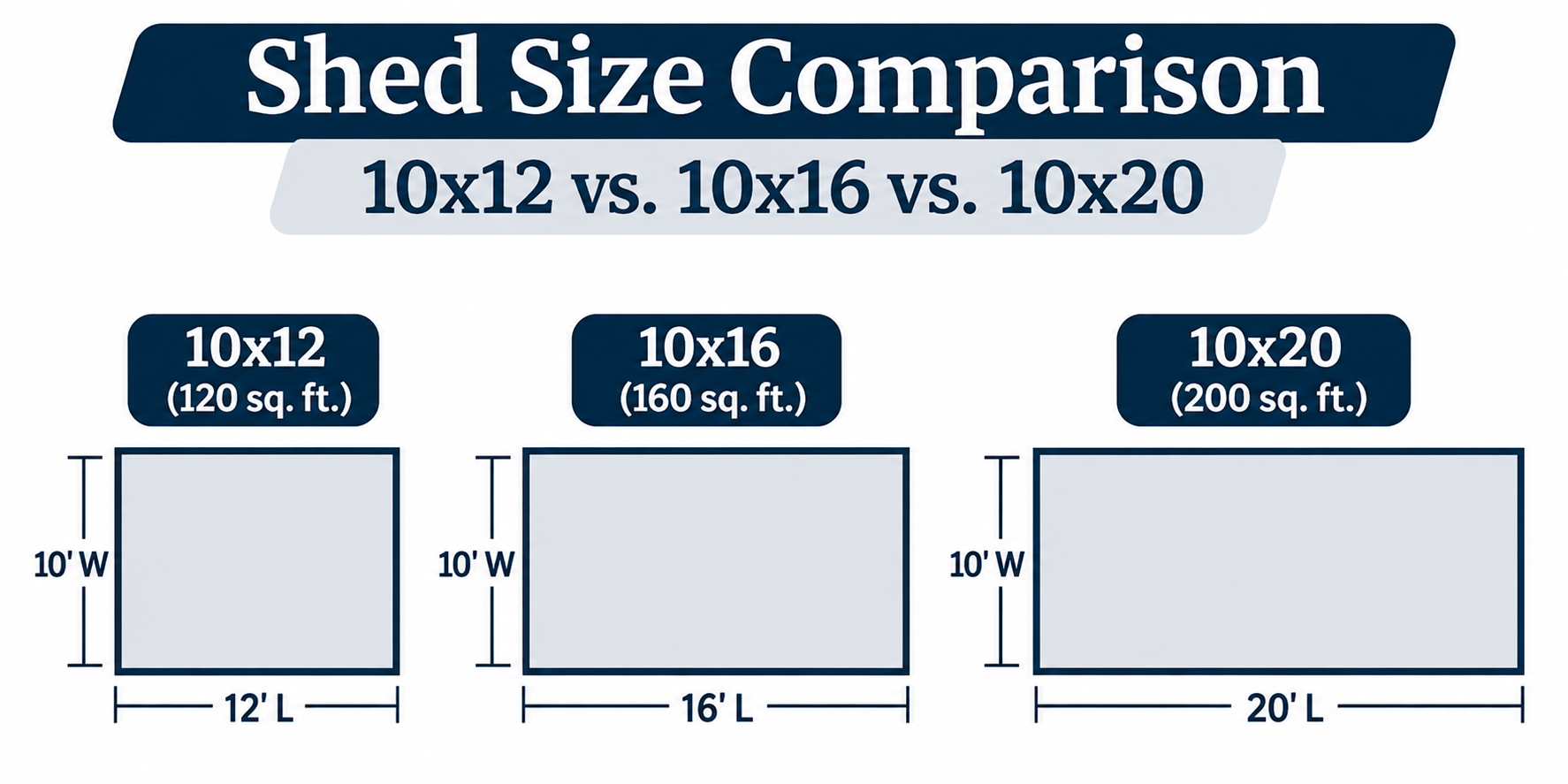
A visual comparison of three popular wood storage shed sizes: 10x12, 10x16, and 10x20. The diagram shows each shed's footprint to scale, highlighting how an additional four feet of length provides 40 more square feet of storage space.
How to Choose the Right Shed Size for Your Equipment
One of the most common mistakes when selecting a shed is thinking only about whether an item will fit inside. You also need to make sure you can get it through the door and move around it once it is inside.
Measure the Equipment and the Door Opening
Measure the length, width, and overall height of your mower, golf cart, tractor, ATV, or motorcycle.
Do not rely solely on the manufacturer's advertised equipment dimensions. Include accessories that affect clearance, such as a golf cart's roof or a subcompact tractor's rollover protective structure (ROPS).
Door height is especially important. Customers sometimes underestimate the height of a lifted golf cart with a top or a tractor with a ROPS. A piece of equipment may fit within the building's interior dimensions but still be too tall to enter through the door.
Depending on your equipment, a deluxe shed may be a better option because it provides additional wall height and allows for higher-clearance entry options, such as a Rampage door or an overhead door. The appropriate configuration depends on the equipment and the specific building.
Before ordering, confirm the actual door opening dimensions and the required clearance with your shed provider.
Leave Room to Move Around Inside
A shed should do more than hold your equipment. You should be able to access the items you store there without constantly moving everything else.
Consider what happens when you park a zero-turn mower inside. Will you still be able to reach your gardening supplies? Can you retrieve a storage box without moving the mower? Is there enough room to maneuver equipment through the doorway?
Door placement also matters. A centered door may look balanced from the outside, but it is not always the most practical arrangement. Depending on how you organize the interior, it may divide your storage area or force you to maneuver around a mower to reach items on either side.
Think through your normal routine before choosing the door location.
Should You Buy a Bigger Shed Now or Upgrade Later?
Your storage needs can change over time, and your shed should account for that possibility.
A growing family may accumulate sports equipment, bicycles, holiday decorations, and outdoor gear over the years. Someone who currently owns a small lawn mower may eventually purchase a larger zero-turn. Planning for those changes can help you avoid outgrowing your shed.
The decision is different for everyone. Someone who is later in life and expects their belongings to remain relatively consistent may have little reason to purchase more space than they need.
The important thing is to be realistic about your future plans.
If you are already deciding between a 10x12 and a 10x16, ask yourself whether the extra four feet would give you useful room for equipment access or additional storage. The same question applies when comparing a 10x16 with a 10x20.
More space is not automatically better if you will never use it. However, if you are already concerned about fitting everything into the smaller option, it is worth evaluating the larger size before making your purchase.
What If Your Property Limits the Size of Your Shed?
Not every property allows you to install the shed you would ideally choose. Homeowners associations (HOAs), mobile home parks, campgrounds, RV parks, and some new housing developments may have restrictions on building size, placement, or appearance.
Before settling on a size, check the rules that apply to your property. Local zoning requirements may also specify setbacks from property lines, houses, garages, or other structures.
If you are limited to a smaller footprint but need more storage, consider a lofted barn. Its overhead loft provides additional storage space without requiring all your belongings to occupy the main floor.
A lofted barn can be especially useful for seasonal decorations, lightweight storage boxes, and other items you do not need to access every day. Remember to account for safe access to the loft and any applicable load limits.
Checking these restrictions early can prevent you from choosing a building that cannot be placed where you want it.
Don't Overlook Shed Placement and the Foundation
The location and foundation of your shed can be just as important as its dimensions.
Plan Your Door Placement Around the Terrain
If your yard slopes, consider which direction the doors will face. When a shed has a ramp, positioning the entrance toward the uphill side may make ramp installation easier and provide a smoother transition into the building.
Think about how equipment will approach the shed, too. A doorway that works well on paper may be inconvenient if the surrounding yard makes it difficult to turn a mower or drive an ATV inside.
Choose a Suitable Foundation
A gravel pad is a popular foundation option and can provide a stable base for a shed when properly prepared.
On a very steep yard, a block package may be more practical. Block packages can also be a lower-cost option, but they may settle over time, potentially requiring the shed to be re-leveled later.
RightFit sheds also include a leveling kit that can accommodate up to 24 inches of leveling. This can be useful for customers who want help getting their shed level, prefer not to invest in a separate foundation, and are comfortable with the building sitting directly on the ground. Suitability depends on the site and installation requirements.
Discuss your yard's slope, drainage, and ground conditions before deciding on a foundation. The cheapest initial option is not necessarily the best long-term choice for every property.
Is a Wood Shed Better Than a Metal Building?
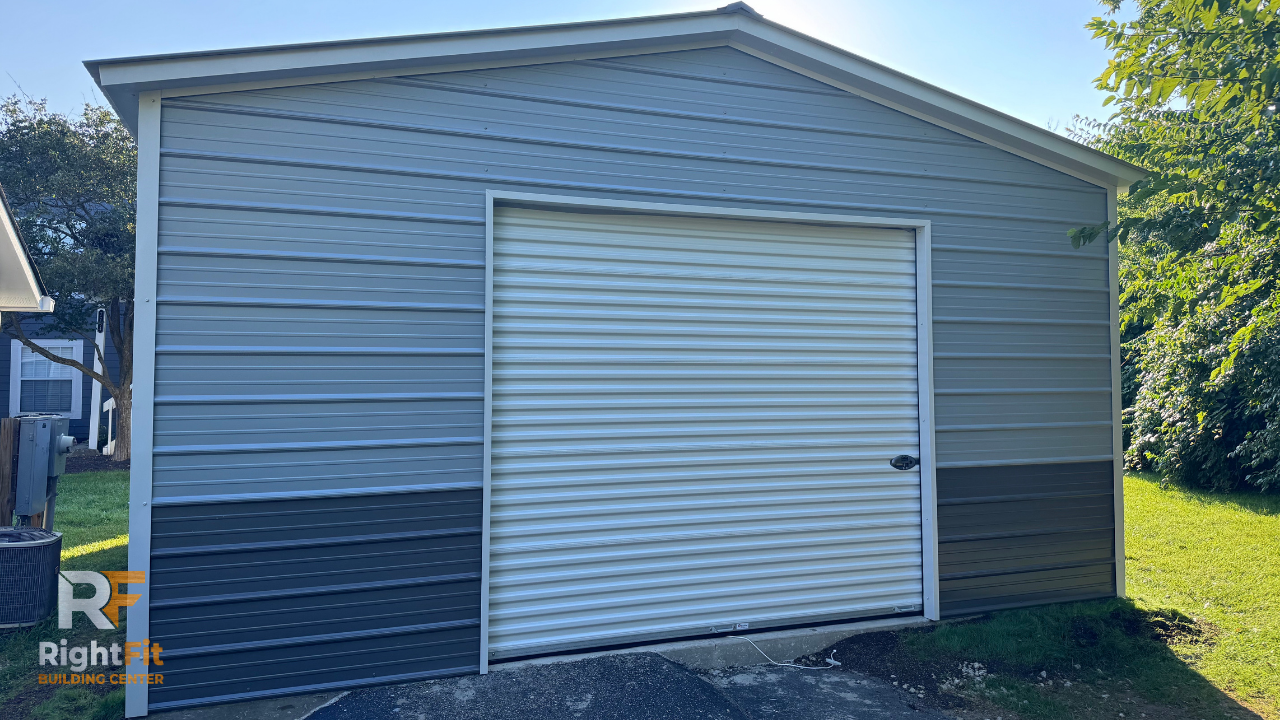
A metal garage featuring two-tone gray siding, a large white roll-up door, and a gable roof. Metal buildings can be a practical alternative to wood sheds when additional space is needed for vehicles, equipment, or larger storage needs.
For many homeowners looking at a 10x12, 10x16, or 10x20, a wood storage shed is a straightforward solution. It can accommodate boxed belongings, lawn equipment, motorcycles, ATVs, and golf carts, as well as hobby spaces such as she-sheds and man caves.
Working with a shed provider can also simplify the process by bringing design, purchasing, delivery, foundation options, and installation together through one company.
Metal buildings may make more sense when you need to store larger vehicles, RVs, tractors, or substantial equipment, or when you want a large covered area for activities such as basketball or pickleball.
One consideration is moisture. Metal buildings can experience condensation under certain conditions, so storage methods matter. Plastic totes may be more appropriate than cardboard boxes for belongings that need protection from moisture.
Permitting requirements vary by property and jurisdiction. Some shed projects may have a simpler approval process, while metal buildings can involve additional zoning, site-plan, engineering, or concrete work requirements. Always verify local requirements before purchasing either type of building.
Which Shed Size Is Right for You?
Here is a simple way to narrow down your decision:
Choose a 10x12 if you primarily need household storage, yard tools, or space for a lawn mower and have limited room on your property.
Choose a 10x16 if you need more flexibility for a zero-turn mower, lawn equipment, and additional belongings.
Choose a 10x20 if you want to store multiple pieces of equipment, need more room to access your belongings, or are planning a dedicated hobby space.
Also consider whether two smaller or midsize sheds might serve your needs better than one large building. Sometimes one person wants equipment storage while another wants a separate space for hobbies. Keeping those uses apart can be more practical than trying to accommodate everything in one building.
The best shed is not necessarily the largest one you can buy. It is the one that fits your belongings, allows you to use them comfortably, meets your property's requirements, and gives you the right amount of room for the years ahead.
Find the Right Storage Shed at RightFit Building Center
If you are comparing 10x12, 10x16, and 10x20 storage sheds, start by listing what you plan to store and measuring your largest piece of equipment, including its height. Then consider how much access space you need, where the doors should go, and what your property will allow.
At RightFit Building Center in Springfield, Ohio, we can help you compare shed sizes, layouts, door options, and foundation choices so you can make an informed decision.
Have questions about which size will work best for your property? Contact RightFit Building Center to discuss your storage needs and explore your options.
