
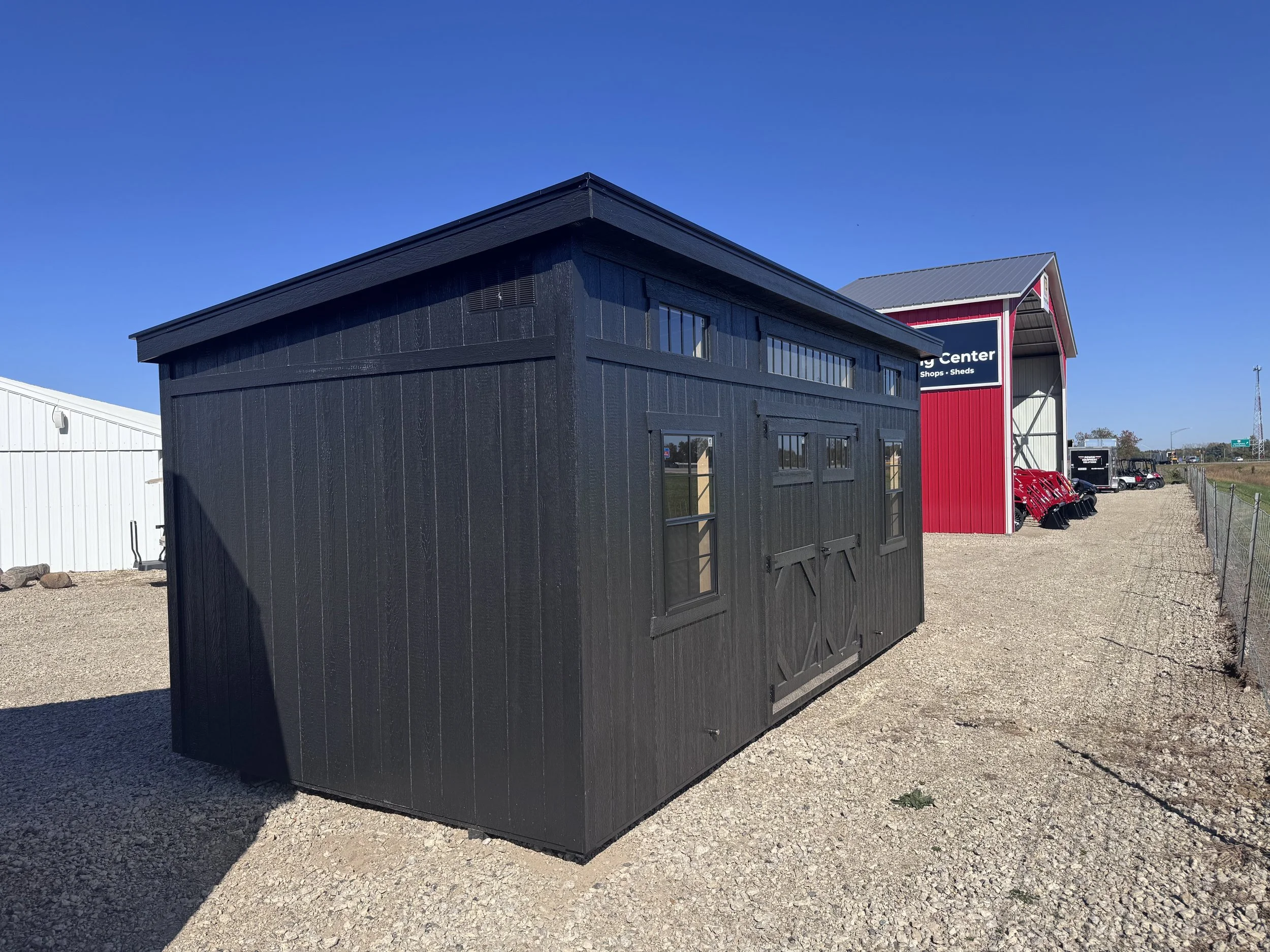
The Dark Knight is a black single-slope wood storage shed displayed at RightFit Building Center in Springfield, Ohio. This model features double barn doors, multiple windows, and a black metal roof, showcasing a modern backyard storage option.
If you're planning to purchase a storage shed in Ohio, one of the first questions you should ask is whether you need a permit. The answer depends on where you live, how large the shed will be, and sometimes what type of structure you're planning to install.
In many Ohio communities, a building permit isn't required for a standard storage shed that is 200 square feet or smaller. However, that doesn't mean you can automatically install a shed without checking local requirements. Zoning permits, property setbacks, height restrictions, and HOA rules may still apply.
At RightFit Building Center in Springfield, Ohio, we regularly help customers throughout the surrounding area choose storage sheds and metal buildings. We've found that permit requirements can vary considerably between counties and even between individual townships and municipalities.
Here's what Ohio homeowners should know before purchasing a new storage shed.
Ohio Does Not Have One Universal Shed Permit Requirement
One of the biggest misconceptions about shed permits is that there's a single square-footage threshold that applies everywhere in Ohio.
While 200 square feet is a common threshold for building permit requirements, local zoning regulations can be different.
For example, some communities require zoning approval for sheds much smaller than 200 square feet. Others have additional restrictions involving placement, height, the number of accessory buildings on a property, and total square footage.
It's also important to understand the difference between two types of permits:
Building permit: Generally addresses construction requirements and applicable building codes.
Zoning permit: Addresses where a structure can be placed and whether it complies with local land-use regulations.
You may need one, both, or neither, depending on your location and project.
Ohio's residential building code includes an exemption for certain one-story, detached accessory storage structures that are 200 square feet or smaller. However, this exemption does not eliminate applicable local zoning requirements.
Shed Permit Requirements in the Counties Around Springfield, Ohio
Because RightFit Building Center serves customers throughout the Springfield area and surrounding counties, we regularly encounter different permit requirements.
Based on our experience working with customers, here are some general guidelines for several nearby counties.
Clark County
Clark County has a lower zoning permit threshold than many surrounding counties.
For properties governed by Clark County's zoning regulations:
Sheds 120 square feet or larger require a zoning permit.
Sheds larger than 200 square feet also require a building permit.
Sheds smaller than 120 square feet do not require a zoning permit under these county regulations, but applicable zoning restrictions still apply.
This is particularly important for customers who assume they can install a 10x12 shed without checking first.
Keep in mind that Clark County's requirements do not automatically apply to every property within the county. Some townships administer their own zoning regulations, and incorporated communities may have their own requirements.
Miami County
In Miami County, accessory buildings larger than 200 square feet generally require zoning approval under the county's accessory structure guidelines.
Even smaller sheds must be considered when determining the total allowable square footage of accessory buildings on a property.
Property acreage, setbacks, and the number of permitted accessory structures can also affect what you're allowed to build.
Champaign County
Champaign County generally requires permits for detached buildings larger than 200 square feet under its published residential building permit guidance.
However, property owners should still verify local zoning requirements before installing a smaller shed.
Montgomery County
Montgomery County has additional zoning considerations that homeowners should understand.
The requirements can vary depending on the township or municipality where the property is located. Some areas require zoning approval for sheds smaller than 200 square feet.
For example, certain Montgomery County zoning guidance requires a zoning certificate for detached sheds larger than 100 square feet.
A building permit may also be required when the structure exceeds 200 square feet or when other construction conditions apply.
Greene County
For customers in Greene County, sheds larger than 200 square feet are generally an important permit threshold to investigate.
Greene County also requires zoning approval from the appropriate local zoning jurisdiction when applicable before issuing a building permit.
The department handling your property will depend on where the building is located.
Madison County
Madison County is another area where customers should check before ordering.
Based on our experience, customers should plan on obtaining permit approval for sheds of any size and verify the requirements with Madison County Planning and Zoning.
Important: These are general guidelines, not a guarantee that a particular shed will qualify for an exemption. Your property's exact location and jurisdiction matter. Always contact the appropriate zoning and building departments before purchasing or installing your shed.
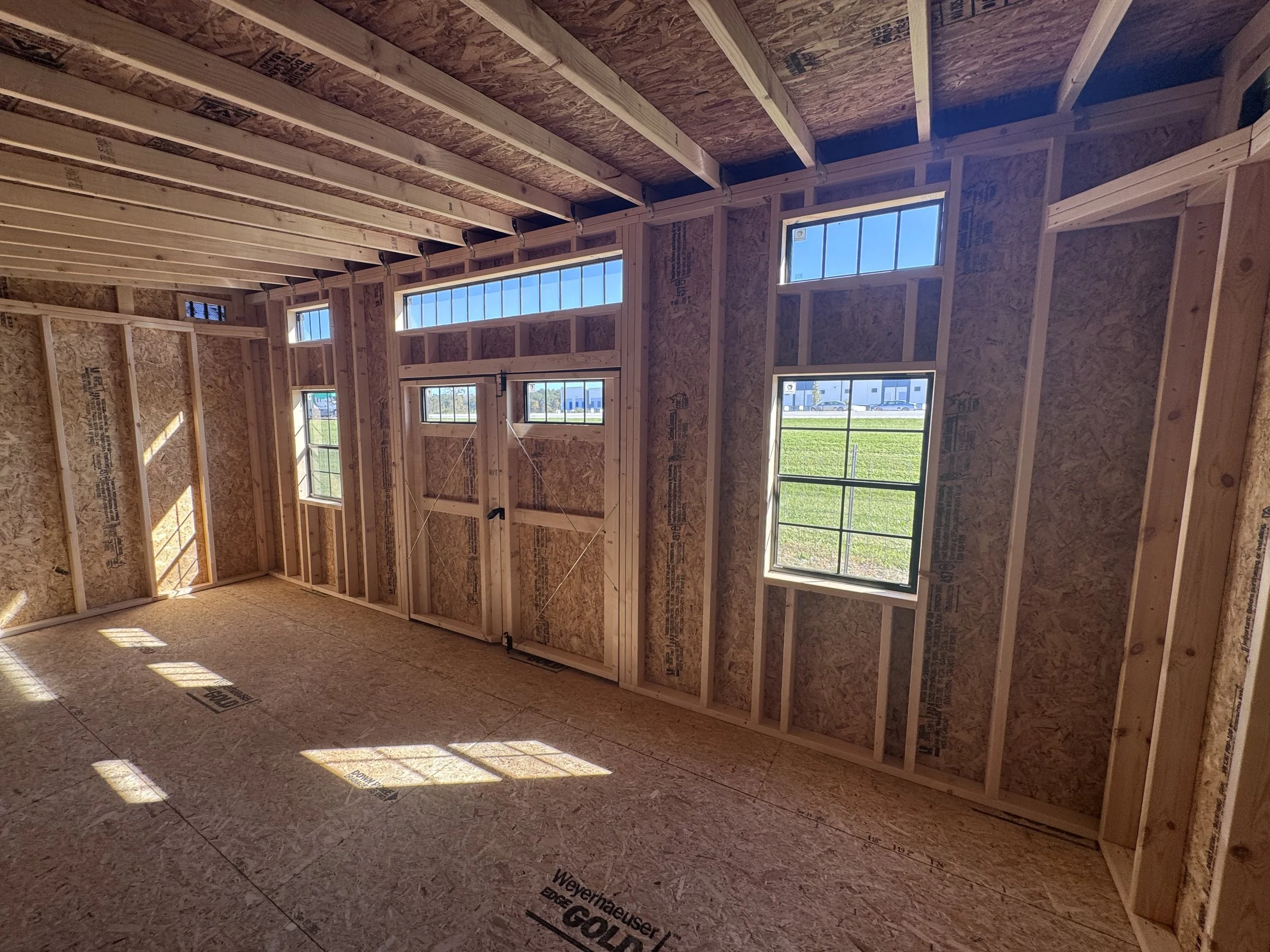
Interior view of The Dark Knight single-slope wood shed display at RightFit Building Center in Springfield, Ohio. The unfinished interior features exposed wood studs, ceiling joists, OSB flooring, double barn doors, and multiple windows that provide natural light.
Setback Requirements: How Far Does Your Shed Need to Be From Your Property Line?
Permit requirements aren't the only consideration when choosing a shed location.
Local zoning offices often have setback requirements that specify how far a shed must be from property lines and existing structures.
We commonly see a five-foot setback requirement, but this is not a universal rule. Some communities have different requirements depending on property size, zoning district, and building dimensions.
Before deciding where your shed will go, consider the following:
Property lines: Know exactly where your property boundaries are. Don't assume an existing fence accurately marks the property line.
Existing structures: Check required distances from your home, garage, and other accessory buildings.
Access around the shed: Think about how you'll use the space. For example, you may want enough room to get your lawnmower between the shed and your house without difficulty.
Underground and overhead utilities: Know where utility lines, electrical services, and other infrastructure are located. Don't block access to utility equipment, even if it serves your own property.
Drainage: Choose a location that stays relatively dry and isn't in the path of water runoff. Consistent exposure to standing water or poor drainage can shorten the useful life of your shed.
These considerations are worth addressing before selecting your shed size and placement.
Don't Overlook HOA and Community Restrictions
Even if your local zoning office allows a particular shed, your homeowner's association may have additional restrictions.
HOAs frequently regulate:
Maximum shed dimensions.
Permitted shed locations.
Building height.
Exterior colors and materials.
Roofing materials and appearance.
Some associations require a storage shed to match the existing home, including its paint color and roofing materials.
This is something we can help customers with at RightFit.
Our wood storage sheds can be customized with architectural shingles or metal roofing. Customers can also bring us a Sherwin-Williams paint color code so we can match their home's exterior color for an additional fee.
If you live in an HOA community, it's a good idea to obtain approval for the proposed shed design before placing your order.
Do Lofted Barns Help When Shed Size Is Restricted?
Sometimes homeowners have limited space or restrictions on the total square footage of a storage building.
A lofted barn can be an excellent solution when ground-level space is limited but additional height is allowed.
The loft provides overhead storage without requiring a larger ground footprint. This can be especially useful for storing seasonal decorations, camping equipment, and other items you don't need to access every day.
However, don't assume that a lofted barn automatically qualifies for the same permit exemption as a standard storage shed.
Some locations have height restrictions, and these can be particularly important in:
RV parks and campgrounds.
Lakefront communities.
HOA neighborhoods.
Mobile home parks.
If you're considering a lofted barn, check both square-footage and height restrictions before selecting your building.
If your desired shed size or height exceeds local restrictions, ask the zoning office whether a variance is possible. Depending on the circumstances, property owners may be able to apply for an exception, although approval is not guaranteed.
Are Metal Buildings and Steel Garages Subject to Different Requirements?
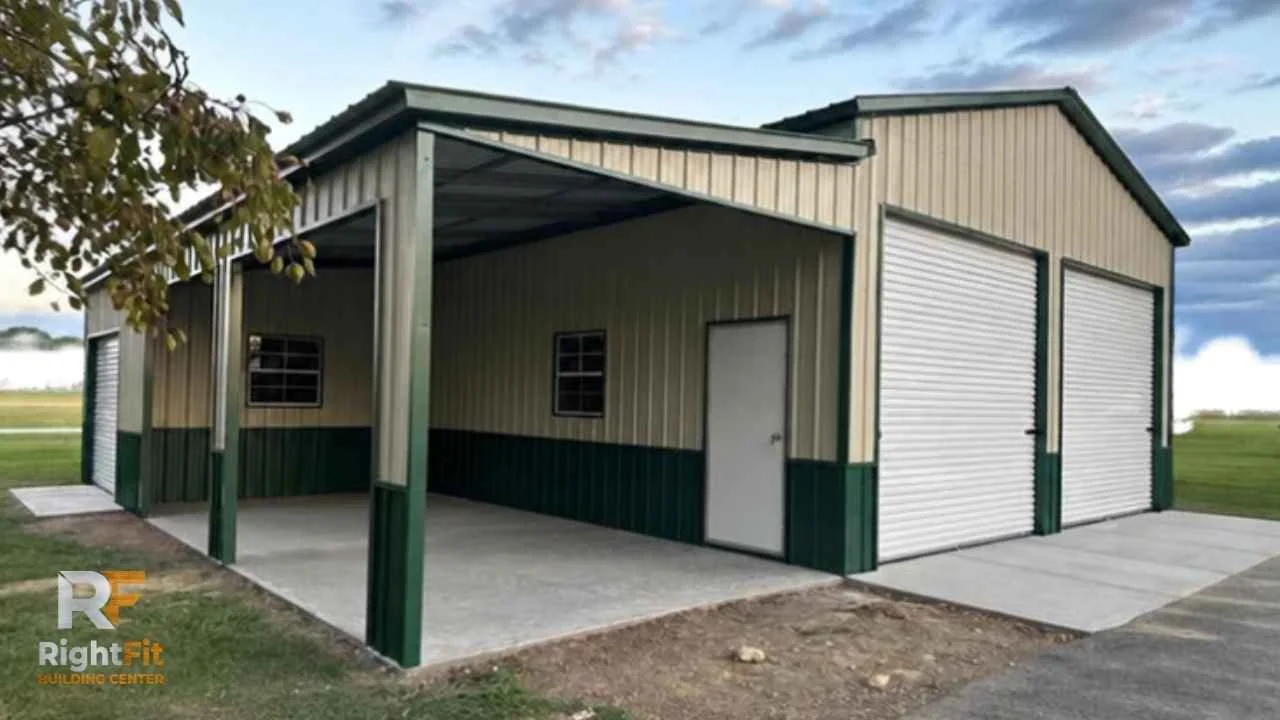
Yes. A larger metal building or steel garage may fall under different requirements than a traditional backyard storage shed.
These structures can involve additional considerations, including:
Maximum building height.
Setbacks from property lines and existing structures.
Site plans showing the proposed building location.
Foundation requirements.
Site-specific blueprints or engineered drawings, depending on the building and its intended use.
The intended purpose of the building can also affect the requirements.
For example, a structure intended for vehicle storage or workshop use may involve different considerations than a small building used exclusively for garden tools.
If you're planning a larger metal building, don't rely on the permit exemption that may apply to a small residential storage shed. Contact the appropriate building and zoning offices to determine exactly what documentation and approvals you'll need.
What About Electrical Permits for Storage Sheds?
Another detail homeowners sometimes overlook is electrical work.
A shed that doesn't require a structural building permit may still require a separate electrical permit if you plan to install permanent wiring.
For example, Clark County's permit guidance lists electrical approval among the requirements for larger accessory structures. Homeowners planning to run permanent electricity to a shed should contact the local building department to determine which electrical permits and inspections apply.
Don't assume that because your shed is small enough to be exempt from one permit, all additional work is automatically exempt as well.
What Happens If You Install a Shed Without a Required Permit?
Failing to obtain a required permit can create problems after your shed has already been delivered and installed.
Depending on the local regulations and the nature of the violation, consequences can include:
Fines or enforcement penalties.
Being required to apply for approval after installation.
Having to relocate the shed to meet setback requirements.
Being required to remove the structure completely.
In Clark County, permit violations can carry financial penalties, and property owners may be required to move or remove a shed that doesn't comply.
Unfortunately, these situations can become expensive.
At RightFit, we encourage customers to handle zoning and permitting before purchasing their building. Once a shed has been purchased and delivered, we cannot resolve a property owner's permit or zoning violation.
If a shed must be relocated, the customer may need to hire a professional shed-moving company, which will be an additional expense.
It's much easier to verify the requirements before delivery than to deal with a problem afterward.
How RightFit Building Center Can Help You Plan Your Shed
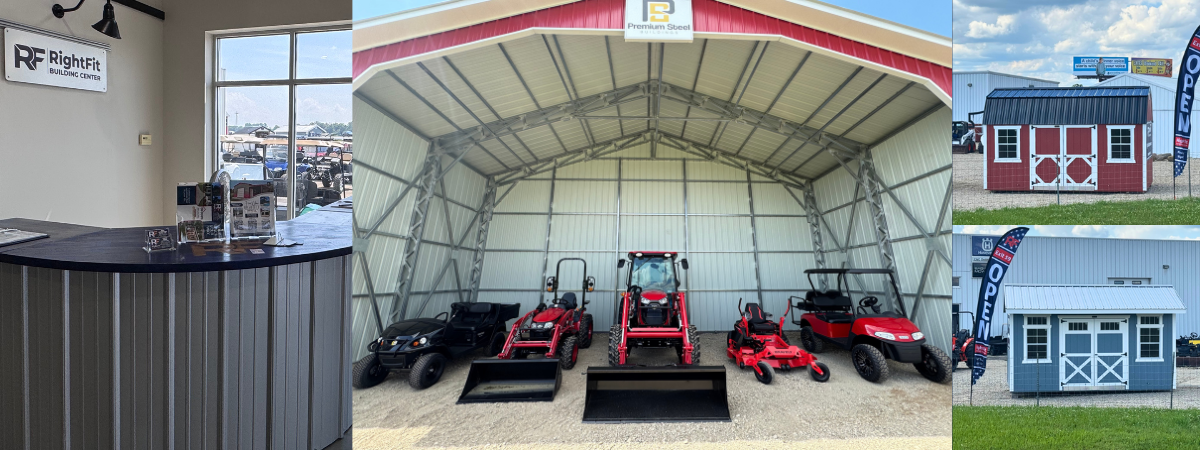
At RightFit Building Center, we understand that every property and homeowner has different needs.
Some customers are limited by the size of their property. Others have HOA restrictions, height limitations, or specific requirements for exterior appearance.
We can often help customers select or design a building that works within their restrictions.
Depending on your situation, that might mean:
Choosing a smaller shed to stay within a local size restriction.
Selecting a lofted barn to gain additional storage overhead.
Matching your home's paint color.
Choosing architectural shingles or metal roofing to complement your home.
Exploring building options that meet applicable height and placement restrictions.
If your preferred building exceeds a local restriction, you may also want to ask your zoning office about the possibility of obtaining a variance.
Our goal is to help you find a building that meets your storage needs while taking your property's limitations into consideration.
However, the property owner is responsible for confirming local requirements, obtaining necessary permits, and securing any required HOA approvals.
Check Before You Buy: A Simple Shed Permit Checklist
Before ordering a storage shed or metal building, we recommend taking these steps:
Contact your local zoning office. Ask whether a zoning permit is required for your proposed building.
Check building permit requirements. Confirm whether the structure's square footage, height, foundation, or intended use triggers additional approvals.
Verify setbacks. Find out how far the shed must be from property lines, your home, and other structures.
Check utilities and drainage. Make sure the proposed location is accessible, safe, and relatively dry.
Review HOA restrictions. Get approval for the building's size, color, roofing, and location if applicable.
Ask about electrical requirements. If you plan to add permanent wiring, find out what additional permits and inspections are needed.
Obtain approval before ordering. Don't assume that a building is exempt simply because it falls below 200 square feet.
Planning a Storage Shed in Ohio? Start With the Right Information
Whether you're looking for a small backyard storage shed, a lofted barn, or a larger steel garage, understanding local requirements is an important first step.
Permit rules can vary considerably throughout Clark, Miami, Champaign, Montgomery, Greene, and Madison counties. Even neighboring properties can sometimes fall under different zoning jurisdictions.
If you're shopping for a building in the Springfield, Ohio area, RightFit Building Center can help you explore shed sizes, styles, colors, and roofing options that may work with your property's restrictions.
We always recommend checking with your local zoning and permitting office before placing an order. A little preparation upfront can save you time, money, and frustration later.
Have questions about choosing a shed or metal building? Contact RightFit Building Center in Springfield, Ohio. We're happy to help you explore your options.
